
The Appliance Noise Detective: Mission Repair Guide
Hearing strange sounds from your appliances that make you wonder if your kitchen is staging a protest? Don’t worry – we’re breaking down those mysterious noises and giving you the detective skills to figure out what’s normal versus when it’s time to call the pros!Your home appliances work hard every single day, but when they start making weird sounds, it can feel like they’re speaking a foreign language. Learning to decode these noises is like becoming a detective in your own home. Some sounds are totally normal, while others are your appliance’s way of crying for help.Understanding appliance noises can save you from expensive breakdowns and help you decide when to tackle a fix yourself versus when to call in the experts. This guide will help homeowners across Mission, from the newer developments near Hatzic to the established neighborhoods around Central Mission, become appliance noise detectives in their own homes.
Key Outtakes:
- Most appliance noises are normal operational sounds, but sudden changes signal potential problems
- Refrigerators, washing machines, and dryers each have distinct sound patterns that indicate their health
- Simple maintenance like cleaning coils or checking for loose items can often solve noise issues
- Grinding, squealing, and loud banging sounds usually require professional attention
- Early diagnosis of appliance noises can prevent costly repairs and extend appliance life
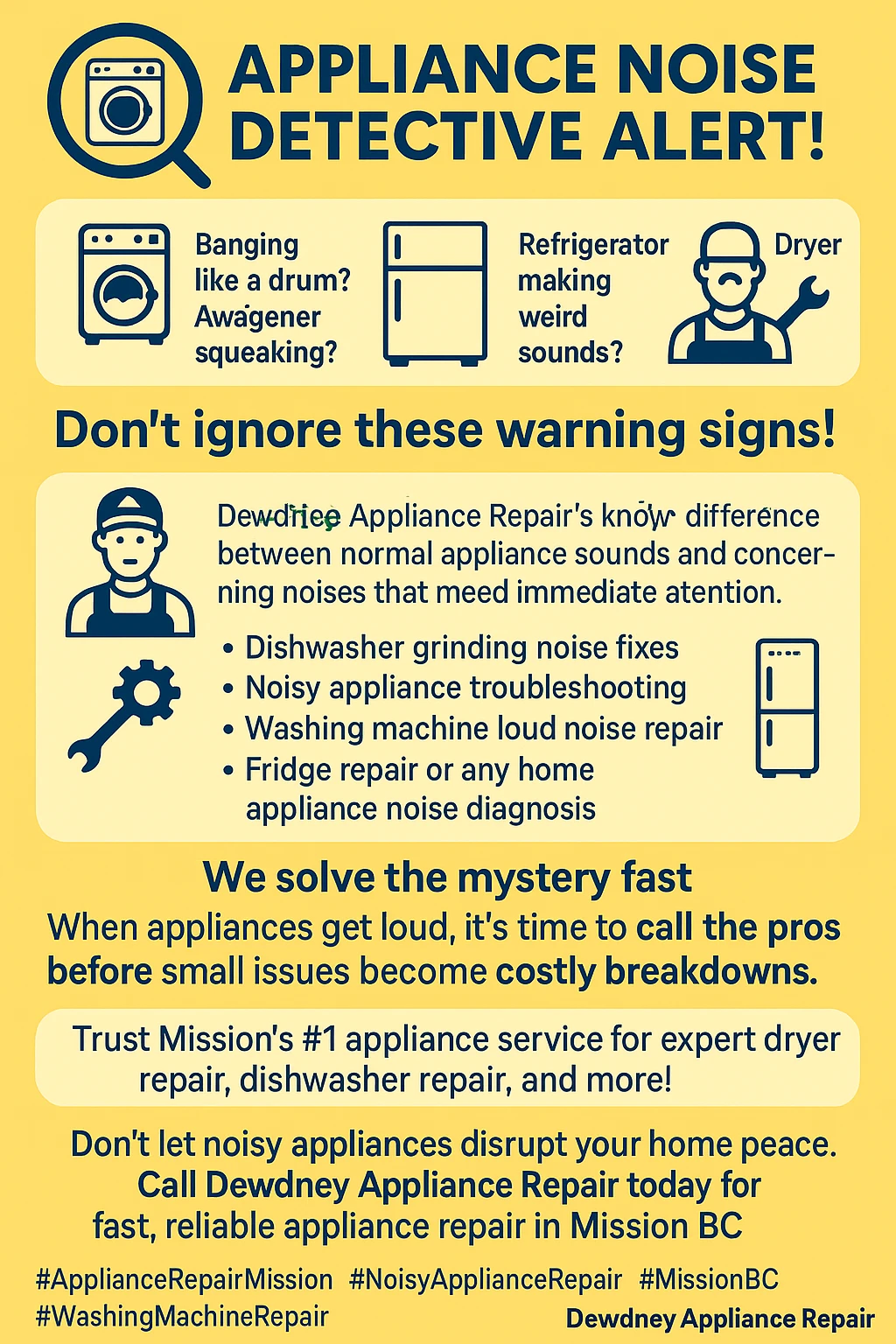
Common Appliance Sounds and What They Mean
Every appliance in your home has its own language of sounds. Think of your refrigerator’s gentle hum as its way of saying “everything’s fine,” while a dishwasher’s occasional gurgling is just normal operation. Learning these sounds helps you spot problems early, which is especially important for homeowners in areas like West Mission where power fluctuations from seasonal weather can stress appliances.Appliances make noise because they have moving parts. Compressors cycle on and off, fans spin to circulate air, and pumps move water around. These are all normal functions that create predictable sounds. The trick is knowing when those sounds change from normal to concerning. A refrigerator that suddenly starts humming louder than usual might have dirty coils, while a washing machine that begins making grinding noises could have worn bearings.Most appliance sounds follow patterns. Your dishwasher might make different noises during the wash cycle versus the drain cycle, and that’s perfectly normal. What you want to watch for are sounds that appear suddenly, get progressively louder, or seem out of place for what the appliance is doing at the time.
Refrigerator Noise Troubleshooting
Your refrigerator runs constantly, so you’ll hear it more than any other appliance. A gentle, consistent hum from the compressor is completely normal – that’s just your fridge working to keep things cold. However, when that hum becomes noticeably louder or changes pitch, it’s time to investigate. This is particularly important for homes in Mission’s older neighborhoods where appliances might be working harder due to varying power conditions.
Normal Refrigerator Sounds
A properly working refrigerator makes several predictable sounds throughout the day. The compressor creates a low hum when it’s running, which might get slightly louder when the fridge is working harder after you’ve loaded it with groceries. You might also hear clicking sounds from the defrost timer, gurgling from refrigerant flowing through the coils, and occasional dripping during the defrost cycle.The evaporator fan, which circulates air inside the fridge, creates a gentle whooshing sound. Ice makers add their own symphony of clicks, whirs, and water-filling sounds. All of these are normal operational noises that shouldn’t concern you. The key is consistency – these sounds should be relatively predictable and not dramatically louder than usual.
Warning Signs to Watch For
Certain refrigerator noises definitely warrant attention. A loud buzzing or vibrating sound often indicates dirty condenser coils, which force your fridge to work harder than necessary. Squealing or screeching usually points to a failing evaporator fan motor. Loud knocking or banging sounds, especially from the back of the unit, could signal compressor problems.If your refrigerator starts making grinding noises, this typically indicates worn-out fan motors or debris caught in the fan blades. These issues won’t fix themselves and usually get worse over time. According to appliance repair experts, addressing these problems early can often save you from more expensive repairs down the road.Rattling sounds are often the easiest to fix – they’re usually caused by loose items inside the fridge or the unit not being level. However, if the rattling persists after checking these simple causes, it could indicate loose internal components that need professional attention.
Washing Machine Sound Analysis
Washing machines are naturally noisy appliances because they agitate, spin, and drain water. Understanding normal versus concerning sounds helps you catch problems before they become major repairs. This knowledge is especially valuable for homeowners throughout Mission who want to maintain their appliances proactively.
Normal Washing Machine Operations
During the wash cycle, you’ll hear water filling the tub, the agitator or drum moving clothes around, and the motor running. The spin cycle creates more dramatic sounds as the drum rotates at high speeds to remove water. You might hear some thumping if clothes bunch up on one side, but this usually resolves itself as the machine redistributes the load.Modern washing machines have sensors that detect unbalanced loads and adjust accordingly. You might notice the machine pause during the spin cycle and start again – this is normal behavior, not a malfunction. The drain cycle creates gurgling and whooshing sounds as water pumps out, which is also completely normal.
Troubling Washing Machine Noises
Grinding noises during any cycle indicate serious problems, usually with the motor coupling, pump, or internal bearings. These components wear out over time and create metal-on-metal contact when they fail. Squealing or screeching sounds often point to belt problems or motor bearing issues that require professional repair.Loud banging that doesn’t resolve after the machine redistributes the load could indicate worn suspension systems or shock absorbers. These components dampen the drum’s movement, and when they fail, the entire machine can shake violently. If your washing machine starts “walking” across the floor during operation, this definitely needs attention.Continuous clicking when the machine isn’t running might indicate objects caught in the pump or drain system. While sometimes you can resolve this by checking pockets for coins or small items, persistent clicking often requires professional diagnosis to avoid damaging the pump or motor.
Dryer Noise Diagnosis
Dryers combine heat and tumbling action to dry clothes, creating their own unique set of sounds. Learning to distinguish normal operation from potential problems helps prevent both inefficient drying and potential safety hazards. For Mission residents dealing with humid conditions near the Fraser River, understanding your dryer’s health is crucial for efficient operation.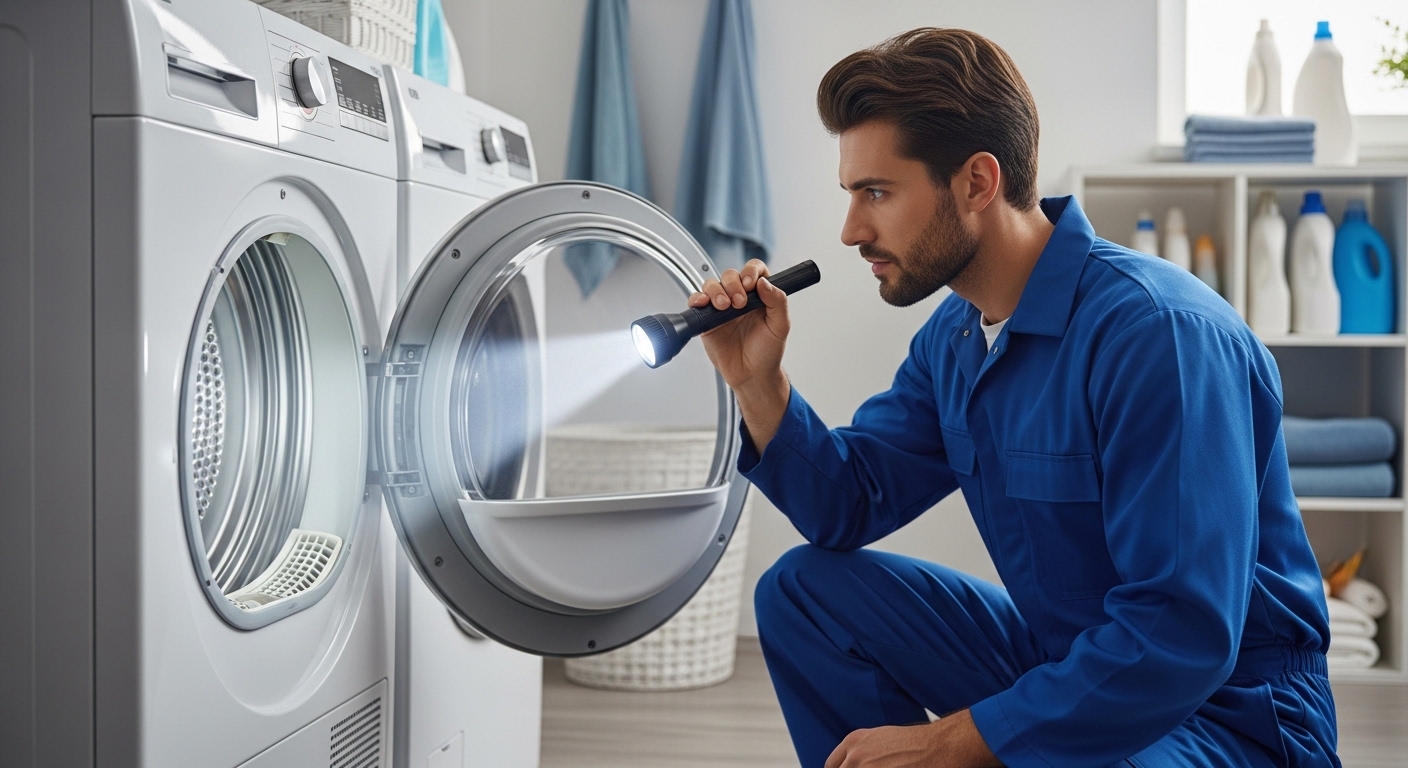 A normally functioning dryer creates a consistent rumbling sound as the drum rotates and clothes tumble. You’ll also hear the blower fan moving air through the system and occasional clicking from gas valves if you have a gas dryer. These sounds should remain relatively consistent throughout the drying cycle.
Concerning Dryer Sounds
Squealing or scraping noises usually indicate worn drum rollers, a damaged belt, or a failing idler pulley. These components help the drum rotate smoothly, and when they wear out, they create friction and noise. Left unaddressed, these problems can lead to complete belt failure or motor damage.Thumping sounds that persist throughout the cycle often indicate flattened drum rollers or objects caught in the drum seals. Unlike the occasional thump from an unbalanced load, these sounds continue consistently and usually get worse over time. Grinding noises are particularly concerning as they often indicate bearing failure or foreign objects damaging internal components.High-pitched whining sounds might indicate blower wheel problems or restrictions in the exhaust vent. Since proper airflow is crucial for both efficiency and safety, these issues require prompt attention. A blocked vent not only makes your dryer work harder but can also create fire hazards from overheating.
When to Call Professional Help
While some appliance noises have simple solutions like cleaning or leveling, others require professional expertise. Understanding when to attempt DIY fixes versus calling experts can save you money and prevent further damage. Professional repair services understand the complexity of modern appliances and have the tools to diagnose problems accurately.Grinding, squealing, and loud banging sounds almost always require professional attention. These noises usually indicate worn internal components that need replacement with proper tools and expertise. Attempting DIY repairs on complex mechanical issues can void warranties and potentially create safety hazards.Similarly, any electrical issues, gas-related problems, or concerns about refrigerant systems should always be handled by qualified technicians. These systems require specialized knowledge and tools to service safely. Professional technicians can also spot related problems that might not be obvious to homeowners, potentially saving you from multiple service calls.
Frequently Asked Questions
Why is my refrigerator making a loud humming noise?
A loud humming noise from your refrigerator usually indicates that the compressor is working harder than normal. This often happens when the condenser coils are dirty and need cleaning, or when the unit isn’t getting proper ventilation. Try cleaning the coils with a brush and vacuum, and ensure there’s adequate space around the refrigerator for air circulation.If cleaning the coils doesn’t solve the problem, the compressor itself might be failing. This is a more serious issue that requires professional diagnosis, as compressor replacement is a major repair that may not be cost-effective on older units.
What does it mean when my washing machine makes grinding noises?
Grinding noises from a washing machine typically indicate worn internal components like the motor coupling, pump, or bearings. These parts experience significant wear over time and eventually need replacement. The grinding sound occurs when metal components make contact without proper lubrication or when parts have worn beyond their tolerances.This type of noise usually gets progressively worse and can lead to complete machine failure if ignored. Professional diagnosis is recommended because grinding sounds can indicate several different problems, each requiring specific repair approaches.
Is it normal for my dryer to make clicking sounds?
Occasional clicking from your dryer can be normal, especially if you have a gas dryer where the gas valve makes clicking sounds during operation. However, continuous or rapid clicking usually indicates a problem. Objects like coins or buttons caught in the drum seals can create clicking sounds, or there might be issues with the drive mechanism.If the clicking is rhythmic and matches the drum rotation, check for small objects caught around the drum seals or lint filter area. If clicking continues without the drum moving, this often indicates electrical or mechanical problems that need professional attention.
Wrapping Up
Becoming an appliance noise detective takes practice, but understanding what your appliances are telling you can save money and prevent inconvenient breakdowns. Most sounds are normal operational noises, but sudden changes or new sounds usually indicate problems that need attention.Remember that early intervention often means simpler, less expensive repairs. When in doubt, especially with grinding, squealing, or persistent loud noises, it’s wise to consult with professionals who can properly diagnose and fix the problem. At Dewdney Appliance Repair, we help Mission homeowners keep their appliances running quietly and efficiently, providing expert diagnosis and repair services throughout the area.
