
Ever wondered how long your trusty kitchen appliances will actually last before they give up the ghost? Dive into our comprehensive Mission-area appliance lifespan calculator and discover when it’s time to repair versus replace your household workhorses! Picture this: you’re standing in your kitchen at 6 AM, coffee mug in hand, watching water spread across your floor from what used to be your reliable dishwasher. Sound familiar? This exact scenario plays out daily in homes across Mission, from West Heights to Hatzic Island, and it’s totally preventable with the right knowledge. 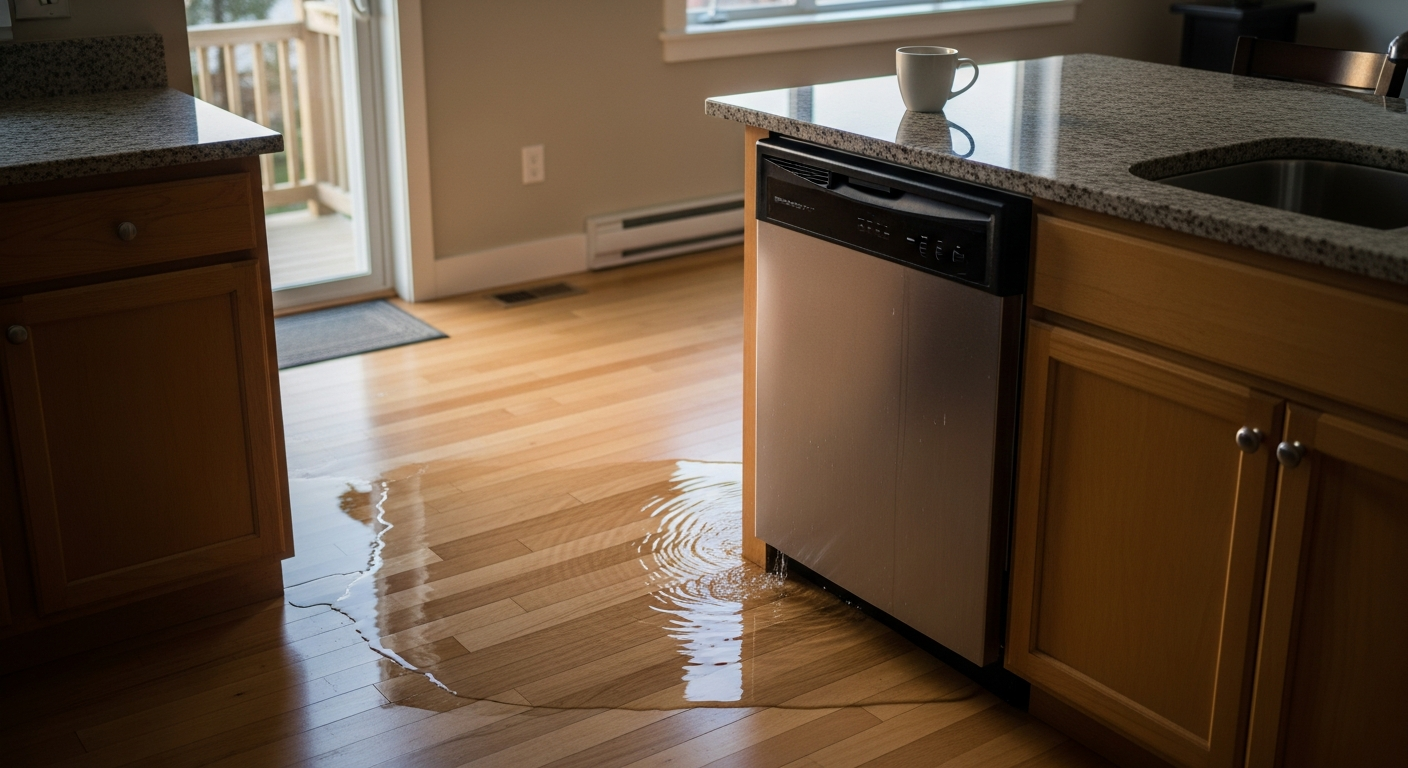 Most of us treat our appliances like they’ll last forever, but the reality is that major household appliances follow predictable patterns. Understanding these lifespans can save you thousands of dollars and countless headaches, whether you’re living in downtown Mission or up in Durieu.
Key Outtakes:
- Most major appliances have a 10-15 year lifespan, with the 10-year mark serving as a critical evaluation point for replacement planning
- The 50% rule states that if repair costs exceed half the replacement price, it’s time to replace rather than repair
- Energy efficiency improvements can save 20-50% on utility bills when upgrading from pre-2010 appliances
- Proactive replacement planning prevents emergency purchases and allows homeowners to shop for better deals during off-peak seasons
- Warning signs like excessive noise, water leaks, and declining performance indicate impending failure and should trigger replacement planning
Understanding Appliance Lifespans: The Science Behind the 10-Year Rule
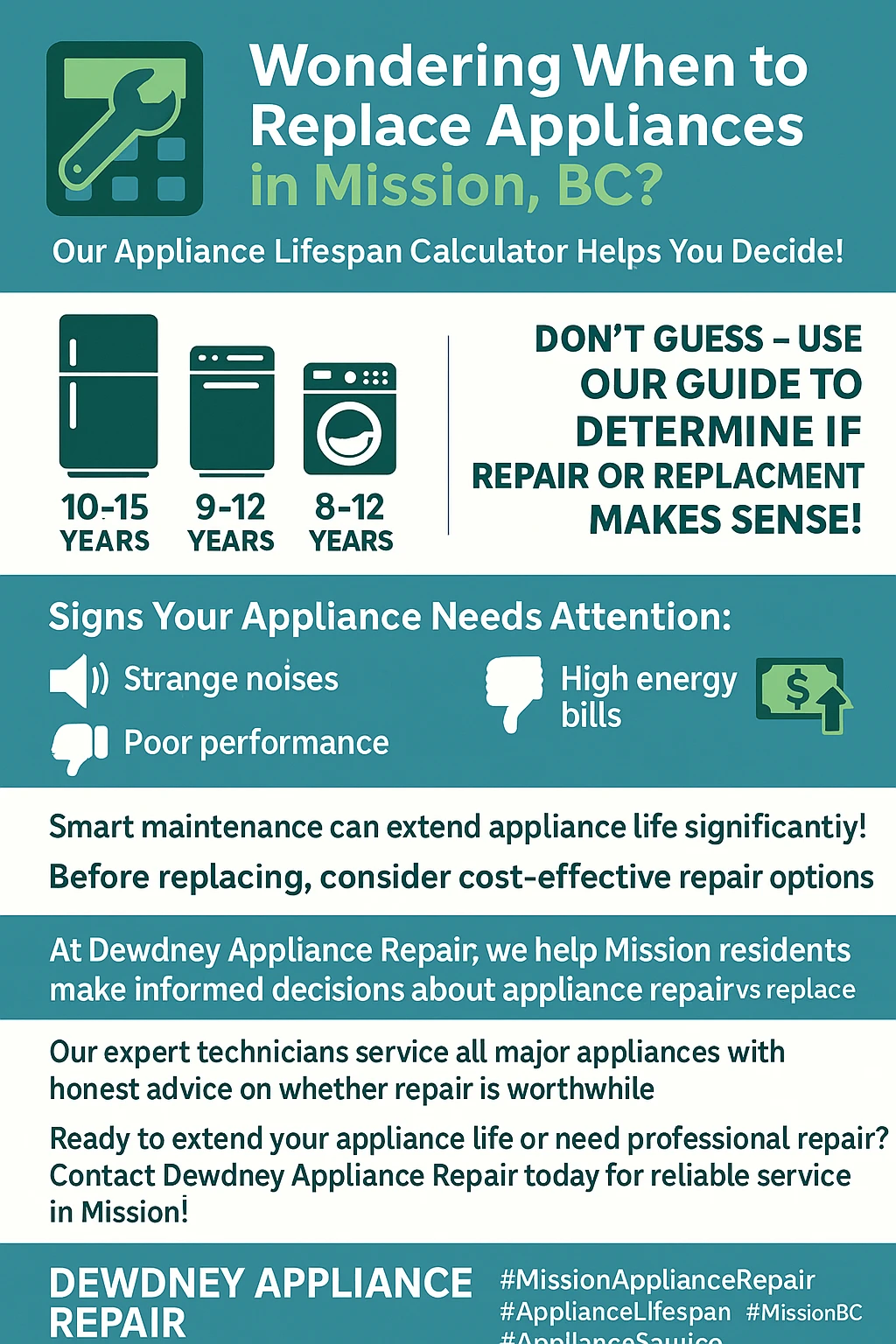
Let me bust a myth that’s been floating around home improvement circles for years – the idea that modern appliances are complete junk compared to vintage models. While your grandmother’s 1950s refrigerator might still be humming along, the reality is way more nuanced than the “they don’t make ’em like they used to” narrative suggests. Here’s what actually happens with appliance lifespans in Mission homes. According to recent data, most major household appliances follow predictable failure patterns that savvy homeowners can plan around. Refrigerators typically last 10-18 years with a median lifespan of about 12 years. Dishwashers clock in at 8-12 years, with most lasting around 9-10 years before major components start failing. Your washing machine and dryer combo will generally serve you well for 10-14 years, though the washer often goes first due to the complexity of its water systems and motor components. The interesting thing about ranges and ovens is the difference between gas and electric models. Gas ranges tend to be workhorses, lasting 15-17 years because they have fewer electronic components to fail. Electric ranges, with their more complex heating elements and digital controls, typically last 13-15 years. Microwaves are the short-lived members of the appliance family, usually giving up the ghost after 5-9 years. But here’s where it gets really interesting, and this might surprise you. Recent European data actually shows that appliance lifespans are increasing, not decreasing. Large household appliances improved from an average lifespan of 11 years and 7 months in 2019 to 12 years and 6 months in 2023. This completely contradicts the common belief that modern appliances are less durable than their predecessors. The truth is that modern appliances represent a trade-off between durability and functionality that’s worth understanding before you make your next purchase decision. 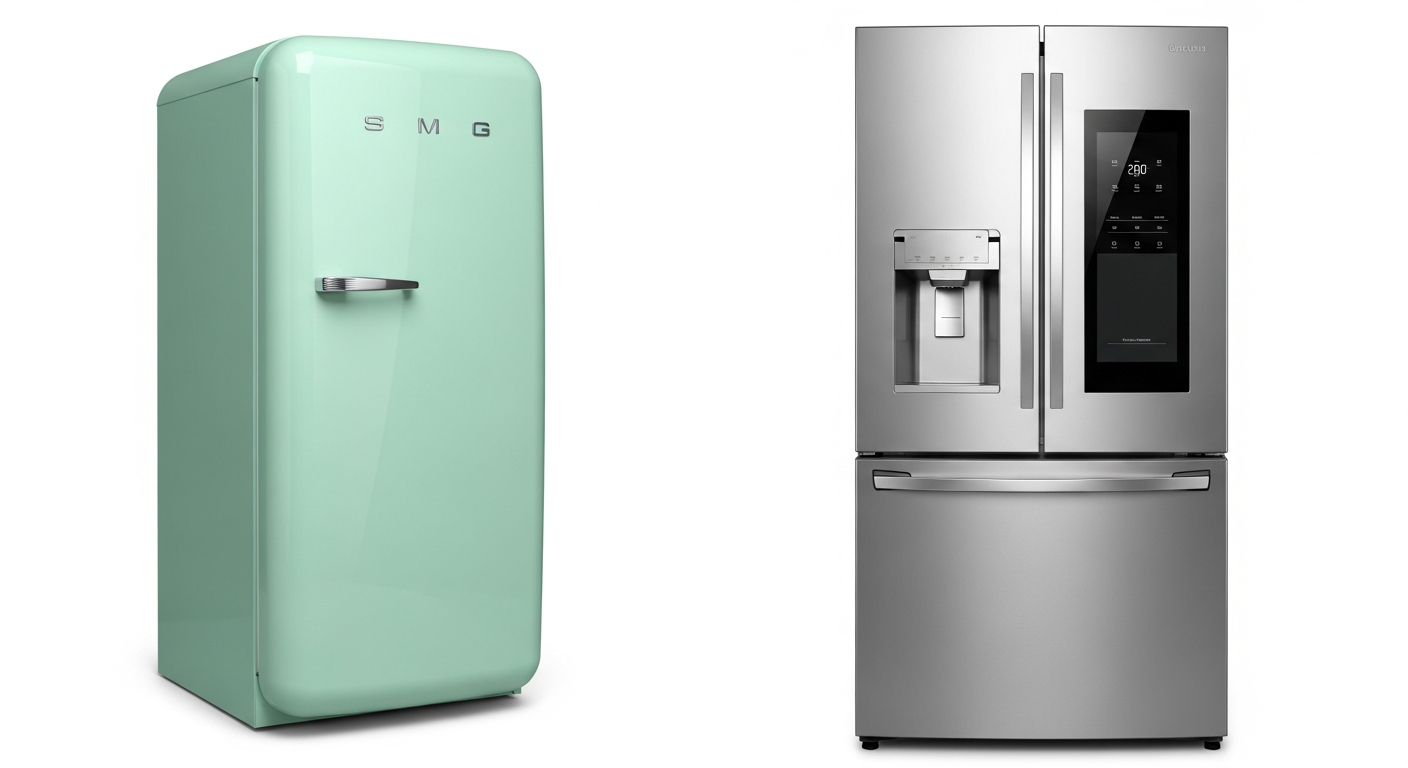
Red Flag Warning Signs: When Your Appliances Are Crying for Help
Moving from understanding lifespans to recognizing trouble signs, let’s talk about how to spot when your appliances are trying to tell you something important. Most appliance failures don’t happen overnight – they’re preceded by warning signs that homeowners in areas like Silverdale and Cedar Valley often ignore until it’s too late. There are some universal red flags that apply across all appliances, and recognizing these can save you from bigger problems down the road. Excessive noise is probably the most common early warning sign. If your refrigerator starts humming louder than your dishwasher, or your washer begins making grinding sounds during the spin cycle, these aren’t quirks to live with – they’re mechanical components telling you they’re wearing out. Rust or cracks anywhere on an appliance are serious safety concerns that signal structural failure is imminent. Water leaks might seem minor, but they’re actually one of the most dangerous warning signs because they increase the risk of electrical shock and can cause significant property damage. I learned this lesson the hard way when a small leak from our dishwasher connection led to warped hardwood floors and a much larger insurance claim than we expected. If your circuit breaker starts tripping when you use a specific appliance, that’s your electrical system telling you there’s a problem that could lead to fire. Don’t ignore these signals – professional assessment can help you understand exactly what’s happening before it becomes an emergency. Each type of appliance has its own specific distress signals too. Refrigerators that can’t maintain consistent temperatures, develop excessive condensation, or have hot back panels are showing signs of compressor stress. When your dishwasher leaves dishes dirty after a full cycle, has standing water after completion, or the door won’t latch properly, the mechanical systems are failing. Washing machines that won’t fill completely with water or shake excessively during cycles are experiencing motor or suspension problems.
The Repair vs Replace Decision Matrix: Making Smart Financial Choices
Now that we’ve covered how to spot trouble signs, the million-dollar question becomes: do you repair it or replace it? This decision can be surprisingly complex, but there are some tried-and-true guidelines that can help you make the right choice for your Mission area home’s specific situation. The foundation of this decision is what appliance professionals call the 50% rule. If a repair costs more than half the price of a new unit, replacement usually makes more financial sense. For example, if your washing machine needs a $300 repair and a comparable new machine costs $600, the repair makes sense. But if that same repair costs $400, you’re better off putting that money toward a new appliance that comes with a warranty and modern efficiency features. Age plays a crucial role in this calculation too. If your appliance is approaching or has passed the 10-year mark, even smaller repairs start looking less attractive. Think about it this way: that $200 repair on an 11-year-old dryer might get you another year or two of use, but you’ll likely face another repair soon. Meanwhile, a new dryer could serve you reliably for the next decade or more. The key is looking at the total cost of ownership, not just the immediate repair bill.  Energy efficiency improvements have become a game-changer in this decision matrix. Appliances manufactured before 2010 typically use 20-50% more energy than current models. Over the remaining lifespan of an older appliance, those utility savings can actually offset a significant portion of the replacement cost. For families in Mission dealing with BC Hydro rates, this efficiency gain becomes even more compelling. Modern appliances also offer features like smart connectivity and improved performance that can genuinely enhance your daily routine.
Creating Your Personal Appliance Replacement Timeline
Building on the repair versus replace framework, let’s create a practical approach to appliance management that works for real Mission families. The secret isn’t waiting for things to break – it’s planning proactively so you’re never caught off guard by a major appliance failure. Start by creating what I call an appliance inventory for your home. List every major appliance, its approximate age, and any warning signs you’ve noticed. If you’re not sure about ages, check the serial numbers – most manufacturers encode the manufacturing date right into these numbers. For appliances approaching the 8-10 year mark, start setting aside money for eventual replacement. Even $20-30 per month can build up a decent replacement fund over a couple of years. Consider the cascade effect when planning replacements. Kitchen appliances often work as a system, and replacing one can highlight how dated the others look or function. If your dishwasher is failing and your refrigerator is also approaching 10 years old, it might make sense to plan both replacements within a reasonable timeframe. This approach lets you coordinate styles, take advantage of package deals, and minimize the disruption to your household routine. Timing your purchases strategically can save serious money. Late fall and early winter typically offer the best appliance deals, as retailers clear inventory for new models. Holiday weekends like Labour Day, Thanksgiving, and Black Friday often feature significant discounts. If you’re planning ahead rather than buying in crisis mode, you can wait for these optimal purchasing windows and potentially save hundreds of dollars on major appliances.
Frequently Asked Questions
How accurate is the 10-year appliance replacement rule?
The 10-year rule serves as a useful benchmark rather than a hard deadline. While many appliances do experience increased failure rates after a decade, proper maintenance can extend lifespans significantly. The rule is most valuable as a planning tool – once appliances hit 8-10 years, it’s smart to start budgeting for replacement and paying closer attention to performance issues.
Keep in mind that usage patterns matter enormously. A dishwasher in a household of two might easily last 12-15 years, while the same model in a family of six could need replacement after 8 years due to heavier use.
Should I always choose the cheapest replacement option?
Not necessarily, and this is where the appliance industry has really changed over the past decade. While basic models often offer the best value for reliability, going too cheap can actually cost more in the long run. Look for the sweet spot – appliances with good efficiency ratings and necessary features, but without excessive bells and whistles that increase complexity and potential failure points.
Extended warranties have become more valuable as appliance complexity has increased. If you’re buying anything with electronic controls or smart features, seriously consider the extended coverage – it often pays for itself with just one service call.
What’s the biggest mistake people make with appliance maintenance?
Ignoring the little things until they become big problems. Simple maintenance like cleaning dryer vents, replacing refrigerator water filters, and descaling dishwashers can dramatically extend appliance life. Most people only think about their appliances when something goes wrong, but spending 30 minutes every few months on basic upkeep can prevent thousands of dollars in premature replacements.
The other major mistake is not recognizing when professional maintenance is worthwhile. Having a technician clean and inspect appliances every few years costs much less than emergency repairs or early replacement.
Wrapping Up
Understanding appliance lifespans and planning accordingly transforms one of homeownership’s biggest stressors into a manageable part of your household budget. Whether you’re dealing with an aging refrigerator in Silverdale or planning a kitchen renovation in downtown Mission, the key is staying ahead of problems rather than reacting to emergencies.
When your appliances do need professional attention, Dewdney Appliance Repair is here to help Mission area homeowners make smart decisions about repair versus replacement. Our experienced technicians can provide honest assessments of your appliances’ condition and help you understand whether a repair makes financial sense or if it’s time to start shopping for a replacement.
