
Your washing machine cleans your clothes every week, but nobody’s cleaning the machine itself and that’s how you end up with that sour, musty smell that seems to cling to everything, even fresh laundry. This guide walks you through exactly how to clean your washing machine, stop mold before it starts, and keep things smelling the way clean laundry should.Here in Mission, we deal with a level of humidity that makes moisture management inside appliances a real concern. Damp air lingers, especially through the wetter months, and a washing machine that isn’t properly maintained becomes a breeding ground for mildew faster than most homeowners expect. At Dewdney Appliance Repair, we see this regularly a machine that looks fine on the outside but has a gasket full of black mold or a dispenser drawer that hasn’t been touched in two years. It’s one of the more common reasons people call us thinking their washer is broken, when really it just needs a proper clean.The good news? This is almost always a DIY job. It takes about an hour, costs next to nothing, and the difference in how your laundry smells afterward is immediate.
Key takeaways
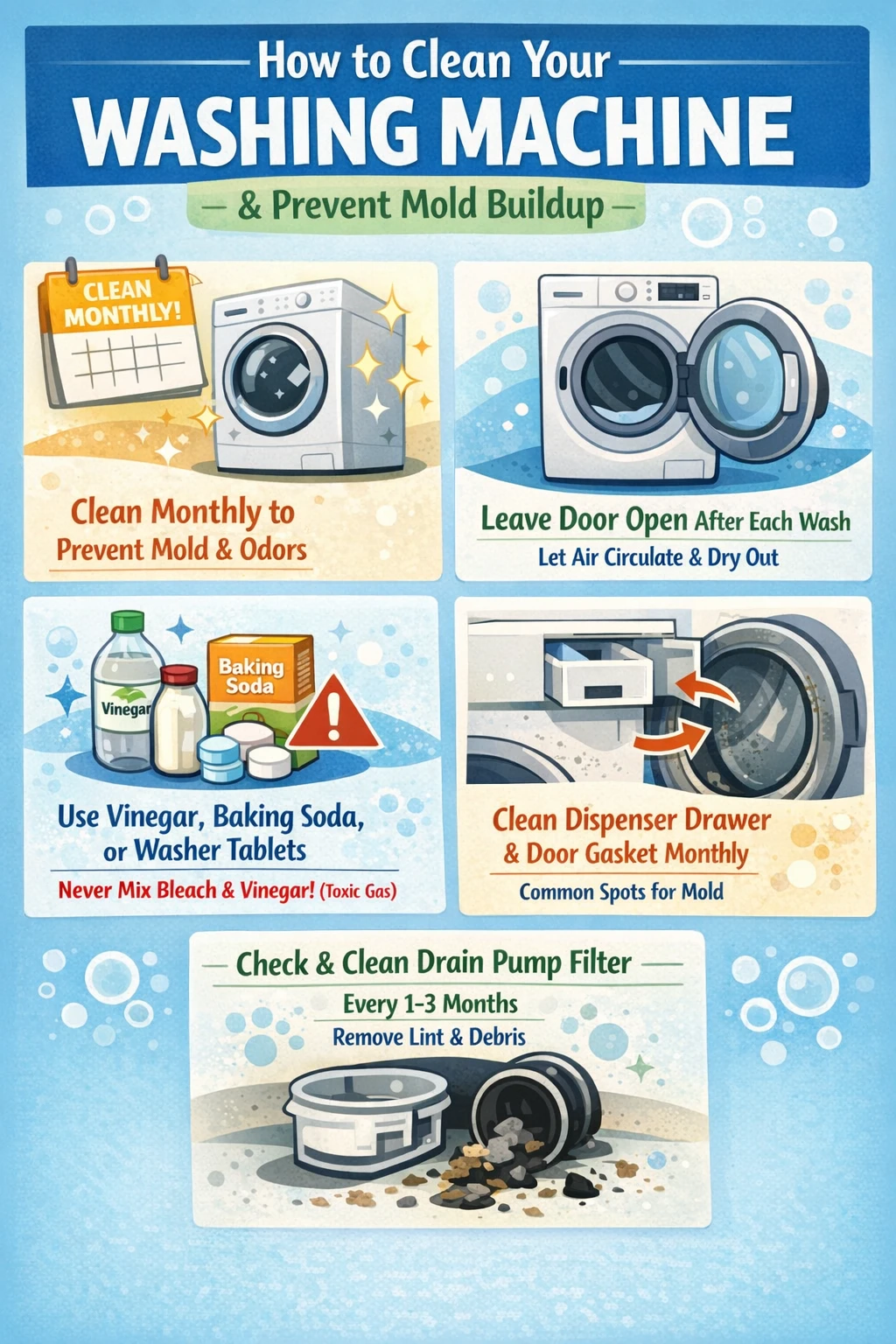
- Clean your washing machine at least once a month every two to three weeks if your household does heavy laundry loads.
- Leaving the door or lid open after every wash is the single most effective habit for preventing mold and mildew buildup.
- White vinegar, baking soda, and purpose-built washer tablets like Affresh all work well never mix bleach and vinegar, as the combination creates toxic chlorine gas.
- The dispenser drawer and door gasket on front-load washers are the two spots most likely to grow mold, and they need attention every month.
- Drain pump filters on front-load machines trap lint, coins, and debris check yours every one to three months using the access panel near the base of the machine.
- Using too much detergent is one of the leading causes of buildup and odor; high-efficiency washers need far less soap than most people use.
Why your washing machine needs cleaning (even when it looks clean)
 A washing machine isn’t self-cleaning. That’s the thing most people get wrong. Every load pulls dirt, detergent residue, fabric softener, and minerals from your water into the machine and some of that stays behind. Think of it like washing a muddy dog in the bathtub. The dog comes out clean, but there’s a ring around the tub. Your washer is the tub.Over time, that residue combines with moisture trapped inside the drum, gasket, houses, and dispenser to create exactly the environment mold and bacteria love. Warm, damp, and full of organic material. Once it takes hold, it doesn’t just smell bad inside the machine it transfers to your clothes. If your laundry comes out smelling less fresh than it used to, or has a faint sour note even right out of the machine, the washer is almost certainly the culprit.Mission’s climate doesn’t help. The combination of damp winters and warm summers means moisture lingers longer than it would in a drier region. Older homes around neighbourhoods like Silverdale can have less ventilation in their laundry areas, which compounds the problem. We’ve opened washer doors in those homes and found mold that’s been growing quietly for months.The other issue is hard water mineral deposits. These build up inside hoses, on the drum, and around the agitator, and they reduce how well the machine drains and circulates water. Regular cleaning dissolves them before they become a real problem.
How to clean your washing machine: step by step
Start with an empty machine. No clothes, no forgotten socks from last week. Check the drum and remove any loose debris lint, buttons, whatever’s been sitting there.If your machine has a dedicated cleaning cycle, use it. Select the hottest water setting, add your cleaning agent of choice, and let it run. If there’s no cleaning cycle, set it to the longest, hottest wash available. That hot water is doing real work dissolving mineral deposits, breaking down soap residue, and killing bacteria that’s been accumulating in places you can’t see.
Choosing your cleaning agent
You have a few solid options here, and honestly, none of them are expensive.Purpose-built washer tablets Affresh is the most widely available brand are the simplest approach. Drop one in the drum, run the cycle, done. They’re formulated to break down residue and hard water minerals without damaging seals or internal components.White vinegar works well for routine maintenance. Add one to two cups to the drum or directly into the dispenser tray and run a hot cycle. It’s a natural deodorizer and does a decent job on mineral buildup. Baking soda is good for odor control half a cup in the drum during a hot wash cycle helps neutralize the smell without being harsh on the machine’s internals.Bleach is an option on some machines, but check your owner’s manual first. Frequent bleach use degrades rubber seals over time. If you do use it, run a rinse cycle afterward to clear any residue. And again never use bleach and vinegar in the same cycle. That combination produces chlorine gas, and it doesn’t matter how well-ventilated your laundry room is. Separate loads, separate days if you want to use both.
Cleaning the dispenser drawer
Pull the dispenser drawer out completely. On most machines it comes out entirely there’s usually a small release tab you press while pulling. Rinse it under warm water, then scrub the compartments with an old toothbrush. Fabric softener in particular turns into a sticky, yellowy residue that builds up in the softener chamber. Let stubborn buildup soak in hot water for 15 to 20 minutes before scrubbing again.If your dispenser isn’t removable, pour warm water mixed with a little vinegar directly into the compartments, let it sit, then scrub and wipe dry.
The door gasket (front-load washers)
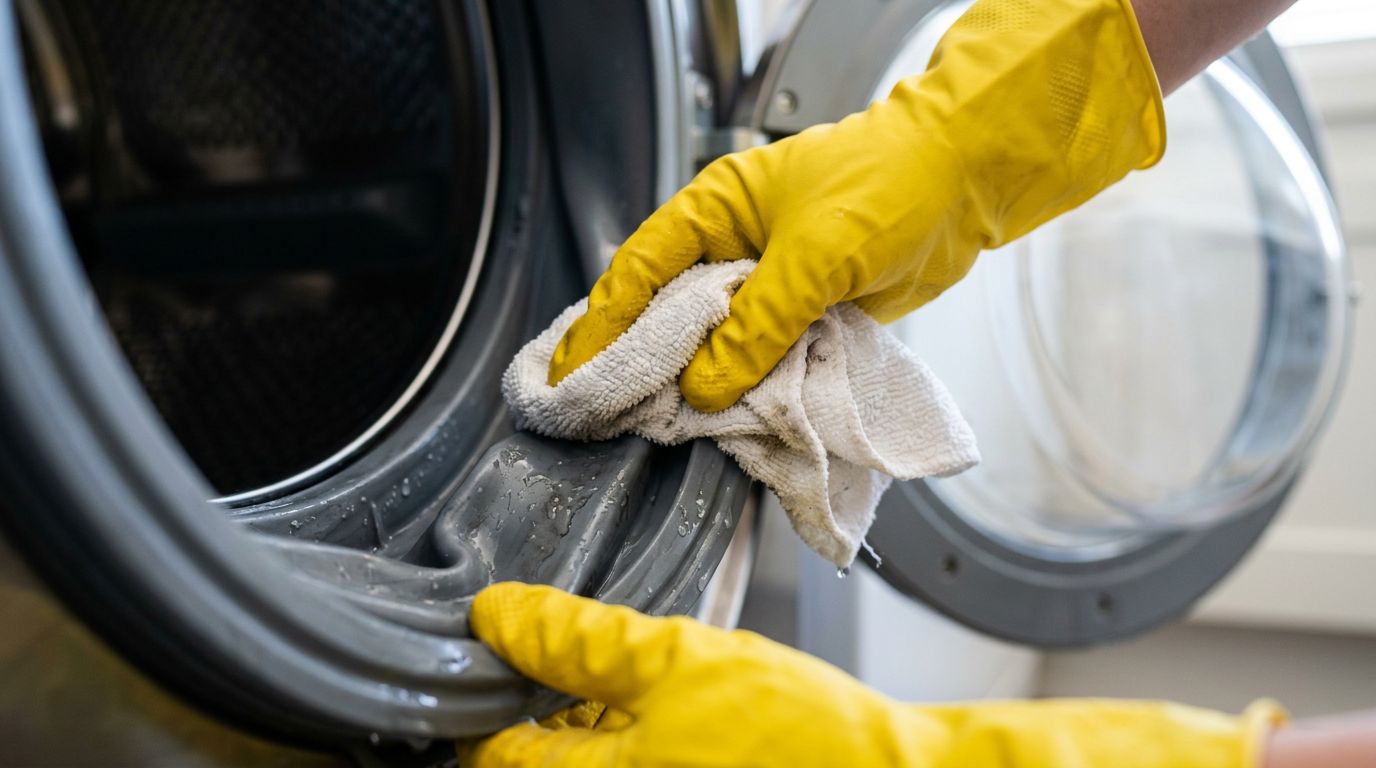 This is where mold takes hold first on front-load machines. The rubber door seal has folds and crevices that trap moisture, lint, and detergent. Pull the gasket back and look inside those folds. Black spotting means mold is already there.Mix warm water with a little mild detergent, or use a diluted white vinegar solution, and wipe thoroughly around the entire seal. Get into every fold. For existing mold spots, a small amount of diluted bleach on a cloth works, but rinse well afterward and make sure the area dries completely before closing the door.Wipe the drum interior while you’re at it. Soap scum leaves a film on the drum surface that contributes to odor over time.
The drain pump filter
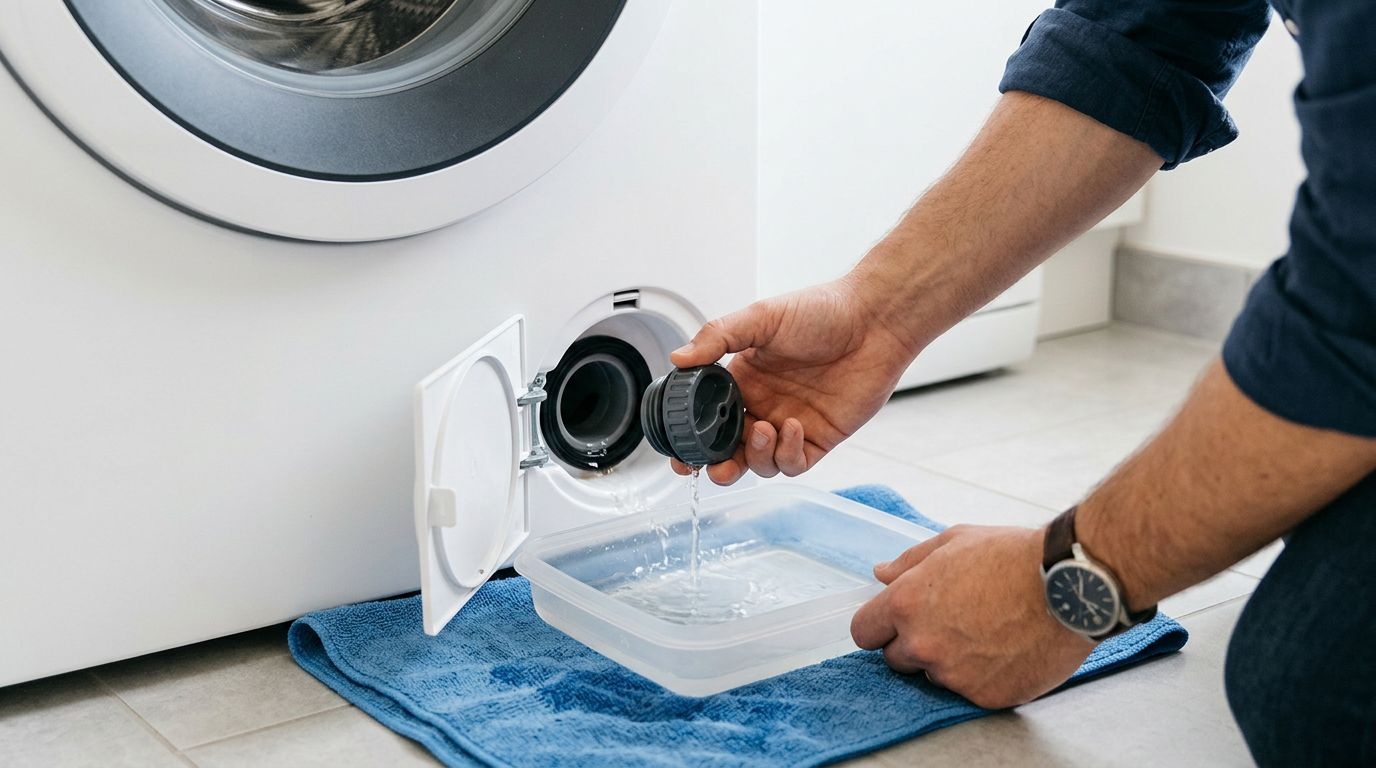
Front-load washers have a drain pump filter, usually accessed through a small panel at the base of the machine. It catches lint, coins, hairpins, and anything else that makes it through the drum. A clogged filter slows drainage and puts strain on the pump and it smells terrible when it’s full.Check your owner’s manual to locate the filter access on your specific model. Place a towel and a shallow tray underneath before opening it, because water will come out. Unscrew the filter, clean out the debris, rinse it, and replace it firmly. Do this every one to three months, or any time you notice the machine draining slowly.
The agitator (top-load washers)
If your top-load machine has an agitator the central post in the drum it can accumulate residue underneath and around its base. Some models have a removable cap at the top of the agitator that lets you clean inside. If it comes off easily, wipe the interior with a damp cloth. If it doesn’t budge, don’t force it. Not all caps are designed to come off, and you can damage the mechanism.Wipe around the rim of the drum and under the lid as well. Those edges collect residue from water splashing during the cycle.
Habits that prevent mold between cleanings
Cleaning the machine once a month is good. Building a few habits that slow the buildup between cleanings is better.The most important one is leaving the door or lid open after every load. This is the single change that makes the biggest difference. A closed machine traps moisture inside, and that moisture has nowhere to go. Leave the door ajar for a few hours after the last load of the day even a few inches of airflow makes a real difference in how quickly the drum dries out.Use the right amount of detergent. This is a bigger issue than most people realize. Excess soap doesn’t make clothes cleaner. It leaves residue in the drum and hoses that breaks down slowly and feeds bacterial growth. High-efficiency machines need significantly less detergent than the measuring cup on the jug suggests follow the manufacturer’s recommendation, not the markings on the detergent packaging.Occasionally run a hot wash cycle even if you prefer cold water for regular laundry. Cold water doesn’t dissolve soap residue as effectively, and heat helps keep the inside of the machine clean between deep cleaning sessions.Pre-rinse heavily soiled items before putting them in the machine. Whatever goes in, stays in at least partially. Clothes caked in mud, pet hair, or food particles leave more behind.We hear from a lot of homeowners in areas like Steelhead that they’d been cold-washing everything for years without issue, then suddenly started noticing the sour smell. Often it’s not the water temperature alone it’s a combination of cold washing, excess detergent, and a door that’s been staying closed. Changing all three at once usually resolves it quickly.
Front-load vs. top-load: what’s different
 The cleaning process is largely the same for both types, but the weak points are different.Front-load washers are more prone to moisture problems because of how they seal. The rubber gasket creates a tight closure that keeps water in during the cycle great for washing, problematic for drying out afterward. The door has to be left open between uses, and the gasket needs monthly attention. Front-loaders also tend to use less water overall, which means detergent residue is more concentrated. Using HE-specific detergent in lower quantities than you think you need is important.Top-load washers are generally less susceptible to gasket mold because there’s no door seal, but they develop their own issues. Residue builds up around the agitator, under the lid, and along the drum rim. The drum also stays wetter for longer in some models because the water drains from the bottom while the drum walls above the waterline stay damp. Running a hot clean cycle monthly and wiping the rim after use keeps this under control.Combination washer-dryer units need the same cleaning attention as standalone washers. If anything, pay more attention to the drum and gasket on these, since back-to-back wash and dry cycles keep the machine warm and humid for longer stretches.
When cleaning isn’t enough
Most washing machine odor problems are solved by cleaning. But sometimes the smell persists, and that’s worth paying attention to.One common and often overlooked cause is the drain hose. If it’s pushed too far into the standpipe, it can siphon drained water back into the machine bringing odor back with it. The fix is to pull the hose out slightly and clip it to the side of the standpipe so it drains cleanly without siphoning. Health Canada’s home safety resources are worth a read if you’re concerned about mold exposure in your home more broadly.If the smell is coming specifically from the dispenser or gasket area even after thorough cleaning, the mold may have penetrated the rubber. In that case, the gasket may need replacement. It’s a relatively straightforward repair, but one that’s easy to get wrong if you haven’t done it before.Persistent poor cleaning performance clothes that don’t feel clean, residue left on fabric, cycles that seem off can also indicate a failing pump, a clogged hose, or another mechanical issue. At that point, cleaning products aren’t going to fix it. Whirlpool’s care documentation is a good starting point if you want to dig into model-specific symptoms before calling anyone.
Frequently asked questions
Washing machine cleaning is one of those topics where the same questions come up again and again. Here are the ones we hear most often, along with straight answers.
How often should I clean my washing machine?
Once a month is the standard recommendation for most households. If you’re doing laundry daily families with kids, pet owners, people who work in dirty environments cleaning every two to three weeks makes more sense. Don’t wait until you notice a smell. By then, the buildup is already well established and takes more effort to clear.
Can I use vinegar and bleach together?
No. Mixing bleach and vinegar produces chlorine gas, which is toxic. Use one or the other in separate cycles, with a rinse cycle in between if you want to use both over the course of a cleaning session. Most people find that vinegar or baking soda alone is sufficient for routine maintenance.
Why does my washer still smell after I cleaned it?
A few places are easy to miss. Check the gasket folds on a front-loader mold hides in there. Check the dispenser drawer, especially the fabric softener compartment. Check the drain pump filter if your machine has one. The drain hose itself is another culprit if it’s siphoning back into the machine. If all of those are clear and the smell persists, the issue may be inside the hoses or pump housing, which requires more involved servicing.
Is it safe to leave the washing machine lid closed?
It’s fine during a cycle. Between uses, keep it open. A closed lid or door traps residual moisture inside the drum, which is exactly the condition mold and mildew need to grow. This is true for both front-load and top-load machines.
What’s the washing machine mold smell actually coming from?
It’s a combination of mold and mildew growing on detergent residue and fabric particles, combined with bacteria feeding on the same material. The smell intensifies when the machine is closed and the interior stays damp. Warm temperatures accelerate it. That’s why summer is often when people first notice the problem the machine is staying warm between uses, and the mold has ideal conditions to spread.
How do I know if I’m using too much detergent?
If you see suds remaining in the drum after the spin cycle, or if there’s a visible film on the drum walls, you’re using too much. HE machines in particular need far less soap than most people assume. Excess detergent also reduces how effectively the machine rinses, so clothes can come out with residue on them even though they went through a full wash.
Wrapping up
Cleaning your washing machine comes down to a few simple things done consistently: a monthly hot cycle with a proper cleaning agent, a thorough wipe of the gasket and dispenser, and the habit of leaving the door open between uses. Do those three things, and mold barely gets a foothold. Skip them for a few months, and you’re dealing with a machine that makes your laundry smell worse than when it went in.If you’ve gone through a proper cleaning and the smell won’t shift, or if the machine is showing signs of a drainage or mechanical issue, that’s worth getting looked at before it turns into a bigger repair. At Dewdney Appliance Repair, we handle washing machine repair in Mission and the surrounding area if you’re not sure what you’re dealing with, give us a call and we’ll help you figure out whether it’s a cleaning issue or something that needs a hands-on look.
